Breathing is the most underrated performance system in the human body. You can have powerful legs, a strong heart, and elite conditioning — but if your respiratory system can’t keep up, everything else suffers. Athletes feel this as the familiar wall of breathlessness. Everyday people feel it as fatigue climbing stairs or during stress. Coaches and clinicians know it as a limiting factor that rarely gets trained properly.
That’s where respiratory muscle training (RMT) comes in — and why respiratory muscle trainers are becoming one of the fastest-growing tools in performance, rehabilitation, and longevity training.
But not all breathing trainers are built equally. In fact, most devices on the market today only train a small piece of the respiratory system — and many of them unintentionally cause hyperventilation, dizziness, and even performance regression. That’s why outdated devices like restriction devices have failed to create meaningful change for many users: they don’t train breathing the way the body actually uses it in sport and life.
Enter the next generation: Isocapnic Breathe Way Better (BWB) — the world’s only closed-loop respiratory muscle trainer that maintains CO₂ balance while strengthening both inhalation and exhalation muscles. This single innovation changes everything we thought we knew about breathing training.
In this guide, we’ll break down:
- What a respiratory muscle trainer really does
- Whether they actually work (science + studies)
- How respiratory muscles get weak
- How to train them properly
- How to use a breathing trainer safely
- Whether lung trainers increase stamina
- And finally — which device is truly best (and why the answer is Isocapnic)
This is your complete education in respiratory training — backed by physiology, real-world results, and modern innovation. Let’s get into it.
What Is a Respiratory Muscle Trainer?
A respiratory muscle trainer is a device designed to strengthen the muscles you use to breathe — primarily the diaphragm and intercostals, along with supporting muscles like the abdominals and accessory neck muscles. Just like you can train leg muscles to run faster or heart muscles to pump more efficiently, you can also train the breathing system to become stronger, more fatigue-resistant, and more efficient.
Most people assume breathing is automatic, so it doesn’t need training. Breathing is automatic, yes — but it is also highly trainable. The respiratory muscles adapt to training just like any other muscle group. When overloaded with resistance or placed under controlled breathing stress, they remodel, improve endurance, and develop greater power output.
Types of Respiratory Muscle Trainers
Not all devices are the same. In fact, they can be grouped into three main categories:
| Type of Device | What It Does | Limitation |
|---|---|---|
| Inspiratory-only trainers (e.g. POWERbreathe) | Adds resistance to inhalation | Ignores exhalation, often causes dizziness, often reenforces poor breathing patters |
| PEP/PEEP devices (positive expiratory pressure – used clinically) | Adds resistance on exhale | Weak training effect, not designed for performance |
| Isocapnic trainers (inhalation + exhalation + gas balance) | Trains full respiratory system safely | Only one exists: Isocapnic BWB |
Most devices on the market only add linear resistance to inhalation. That’s like trying to build total body strength by training only biceps curls. Good effort — wrong system. Breathing needs complete system training: inhale power, exhale control, gas exchange efficiency, and rhythm under load.
Why “Isocapnic” Training Matters
The word isocapnic means maintaining stable CO₂ levels during training. This is a breakthrough because classic breathing devices force users to blow out extra CO₂, which leads to hyperventilation, lightheadedness, and rapid fatigue — limiting how long or how intensely someone can safely train.
The Isocapnic Breathe Way Better (BWB) device solves this problem with a closed-loop breathing system that lets you train respiratory muscles without blowing off too much CO₂. That means:
- No dizziness
- No headaches
- No hyperventilation
- Longer, more effective training sessions
- Real performance development
It isn’t just a respiratory muscle trainer — it’s a complete breathing performance system.
Do Respiratory Muscle Trainers Work?
Yes — respiratory muscle trainers work, and the evidence is no longer up for debate. Over 100 peer-reviewed studies have shown that respiratory muscle training (RMT) can:
- Increase respiratory muscle strength and endurance
- Reduce breathlessness during exercise
- Improve oxygen efficiency
- Delay fatigue
- Enhance athletic performance
- Improve quality of life in people with breathing limitations
But not all training methods or devices are equally effective. Most of the research is based on inspiratory muscle training (IMT) — resistance applied only to the inhale using threshold devices like POWERbreathe or The Breather. These studies consistently show improvements, especially in sports that require sustained ventilation like running, cycling, rowing, and swimming.
Research Snapshot
Here’s a small sample of findings from published studies:
| Study | Result |
|---|---|
| Aaron EA, Seow KC, Johnson BD, Dempsey JA. (1992) | Breathing has a significant oxygen cost during exercise |
| Romer et al. (2002) | IMT improved time trial performance in cyclists by 4.6% |
| Lomax & McConnell (2003) | IMT reduced breathlessness during high-intensity exercise |
| Illi et al. (2012) | Meta-analysis: IMT improves endurance performance by 11–17% |
| Hajghanbari et al. (2013) | RMT improves diaphragm strength and reduces exertion |
These results are significant. But they’re just the beginning of what’s possible — because they still don’t account for one of the biggest problems in breathing: CO₂ control.
The Missing Variable: CO₂ Tolerance
Every study above used devices that do not control CO₂ levels. That means participants hyperventilated while training — blowing off too much carbon dioxide. This is a major limitation because:
- Low CO₂ reduces blood flow to the brain and muscles
- It causes dizziness, tingling, and early fatigue
- It makes breathing less efficient over time
- It disrupts the nervous system and increases sympathetic stress
This is why many people try basic breathing trainers and quit after a few weeks — they don’t feel better, they feel lightheaded and frustrated. The training stimulus is incomplete and uncomfortable.
Why Isocapnic Training Works Better
Isocapnic BWB overcomes this limitation by maintaining CO₂ homeostasis while you train your respiratory muscles. This leads to better adaptation and greater results in less time. Compared to traditional devices, Isocapnic offers:
✅ Stronger training stimulus
✅ Longer training sessions without dizziness
✅ Higher breathing muscle endurance
✅ Improved CO₂ tolerance and buffering
✅ Real transfer into sport and life
Research shows respiratory muscles can fatigue just like leg muscles do — and when they do, the body starts diverting blood away from the limbs and toward the breathing system. This reflex is called the respiratory metaboreflex, and it kills performance. Isocapnic training reduces this effect dramatically by building respiratory strength and efficiency.
Simply put… Yes, respiratory muscle trainers work — but if you want complete breathing system improvement, you need a device that trains inhalation, exhalation, and CO₂ regulation together. That’s exactly why the Isocapnic Breathe Way Better system exists.
What Causes Weak Respiratory Muscles?
Weak respiratory muscles aren’t just a problem for older adults or people with lung disease — they’re surprisingly common in healthy people and even trained athletes. Breathing issues are rarely caused by the lungs themselves. Instead, the limitation is usually neuromuscular — meaning the breathing muscles and control system are underdeveloped or dysfunctional.
Here are the most common causes:
1. Sedentary Lifestyle and Posture Collapse
When people spend long hours sitting, the diaphragm doesn’t move through its full range. Instead of breathing with the diaphragm, they use shallow upper-chest breathing. The diaphragm becomes weak and dormant, like a muscle that stopped being used.
- Slouched posture = reduced breathing volume
- Less diaphragm movement = less strength
- Shallow breathing = higher stress, poor oxygenation
2. Overbreathing and Chronic Mouth Breathing
Most people breathe too much — not too little. This is known as hyperventilation syndrome and it causes excessive loss of CO₂, which disrupts pH regulation and reduces oxygen delivery to muscles (Bohr effect). Chronic mouth breathing also overloads accessory neck muscles, creating neck tension and breathing fatigue.
3. High-Intensity Training Without Respiratory Conditioning
Even elite athletes can have weak respiratory muscles. Training increases the demand for ventilation, but most athletes never train the respiratory muscles directly. Eventually, breathing becomes the limiter — not the legs or heart.
This is why you’ll see marathon runners with shredded quads but a collapsing rib cage in the final kilometers — the respiratory system is fatiguing first.
4. Breathing Restriction from Stress
Chronic stress shifts breathing patterns into fast, shallow, sympathetic breathing. This creates a habit of inefficient breathing that limits diaphragm function, reduces CO₂ tolerance, and increases perceived exertion. Over time, this becomes a nervous-system-driven breathing dysfunction.
5. Aging and Muscle Atrophy
Breathing muscles weaken with age, just like any other muscle. The diaphragm loses thickness, elasticity declines, and rib mobility decreases. This accelerates breathlessness, loss of stamina, and fatigue — but it’s reversible with training.
6. Illness or Reduced Lung Elasticity
Conditions like asthma, COPD, long COVID, and respiratory illness weaken breathing mechanics and limit airflow. Strengthening respiratory muscles improves ventilation efficiency, making breathing easier even when lung health isn’t perfect.
The Common Thread: Weakness + Instability
Whether it’s due to stress, inactivity, or intense sport, the core problem is the same: the respiratory system hasn’t been trained. Like any system, it adapts only when challenged.
That’s why targeted training with a respiratory muscle trainer — especially an isocapnic trainer like the BWB — builds foundational strength, control, and breathing efficiency no matter your starting point.
How Do You Train Respiratory Muscles?
Training the respiratory system follows the same principles as training any other part of the body: apply resistance, create overload, and allow adaptation. The difference is that breathing isn’t just about strength — it’s also about endurance, efficiency, and gas exchange control. That means effective respiratory training must target all components of breathing, not just inhalation resistance.
The four pillars of respiratory training are:
1. Motor Control + Rhythm Training
Efficient breathing is coordinated breathing. Without neuromuscular control, athletes over-recruit neck muscles, lose rib control, and waste energy on chaotic, inefficient breaths. Training proper breathing mechanics restores rib cage expansion, diaphragm dominance, and precise exhalation control. Coordination of range of motion must come first.
✅ Benefit: Better movement + oxygen efficiency
✅ Example: Cadence breathing, breath-hold control
⚠️ Problem with old devices: No focus on technique or rib mobility
2. Endurance Training (Sustained Ventilation)
Breathing isn’t just a max-strength sport — it’s endurance work. During a long run, bike ride, or swim, respiratory muscles can perform thousands of contractions per hour. If they fatigue, oxygen delivery drops and performance crashes through the respiratory metaboreflex.
✅ Benefit: Delays breathing fatigue
✅ Example: Moderate resistance for longer sessions
⚠️ Problem with old devices: Hyperventilation limits duration
3. Strength Training (Pressure Overload)
Just like lifting weights increases muscle strength, adding breathing resistance increases diaphragm and intercostal strength. This improves your ability to take powerful and efficient breaths under load, especially during intense exercise.
✅ Benefit: Stronger breaths with less effort
✅ Example: High-resistance breathing sessions
⚠️ Problem with old devices: Inspiratory-only training is incomplete
4. CO₂ Tolerance and Gas Exchange Training
This is where most people — and most devices — fail. CO₂ isn’t just a waste gas; it regulates breathing and improves oxygen delivery. Training your tolerance to CO₂ reduces breathlessness and improves calm under pressure. To do this safely, CO₂ must be maintained during training — not blown off excessively.
✅ Benefit: Less breathlessness under effort
✅ Example: Breath control and buffering drills
⚠️ Problem with old devices: Hyperventilation destroys CO₂ tolerance
Why Isocapnic BWB Trains All Four Areas
Most devices can only train one of these four pillars. The Isocapnic Breathe Way Better system is the only respiratory trainer that develops strength, endurance, motor control, and CO₂ tolerance together. Its dual-load design lets you train inhalation and exhalation while maintaining CO₂ balance through its closed-loop system. That means more adaptation in less time — without side effects.
Real Training = Real Results
If you want breathing that’s stronger, smoother, and more powerful in sport and life, you must train the system completely. That requires:

✅ Resistance
✅ Control
✅ Progressive overload
✅ CO₂ balance
✅ Consistency over time
The fastest way to achieve this is with a structured program and a device designed to train breathing the way the human body actually works — not a gimmick trainer.
How to Use a Respiratory Muscle Trainer Device
Using a respiratory muscle trainer is simple, but using it effectively requires understanding a few fundamentals. Most people make two big mistakes:
- They breathe too fast (hyperventilate)
- They use too much resistance too soon
The goal isn’t to fight the device — it’s to train the respiratory system progressively, the same way you’d follow a smart strength program in the gym.
How to Use the Isocapnic BWB (Step by Step)
Unlike older devices like POWERbreathe or The Breather, which you simply blow into, the Isocapnic Breathe Way Better system gives you guided respiratory loading without losing CO₂ balance, so you can train longer and safer.
Here’s how a typical session works:
Step 1: Set Up
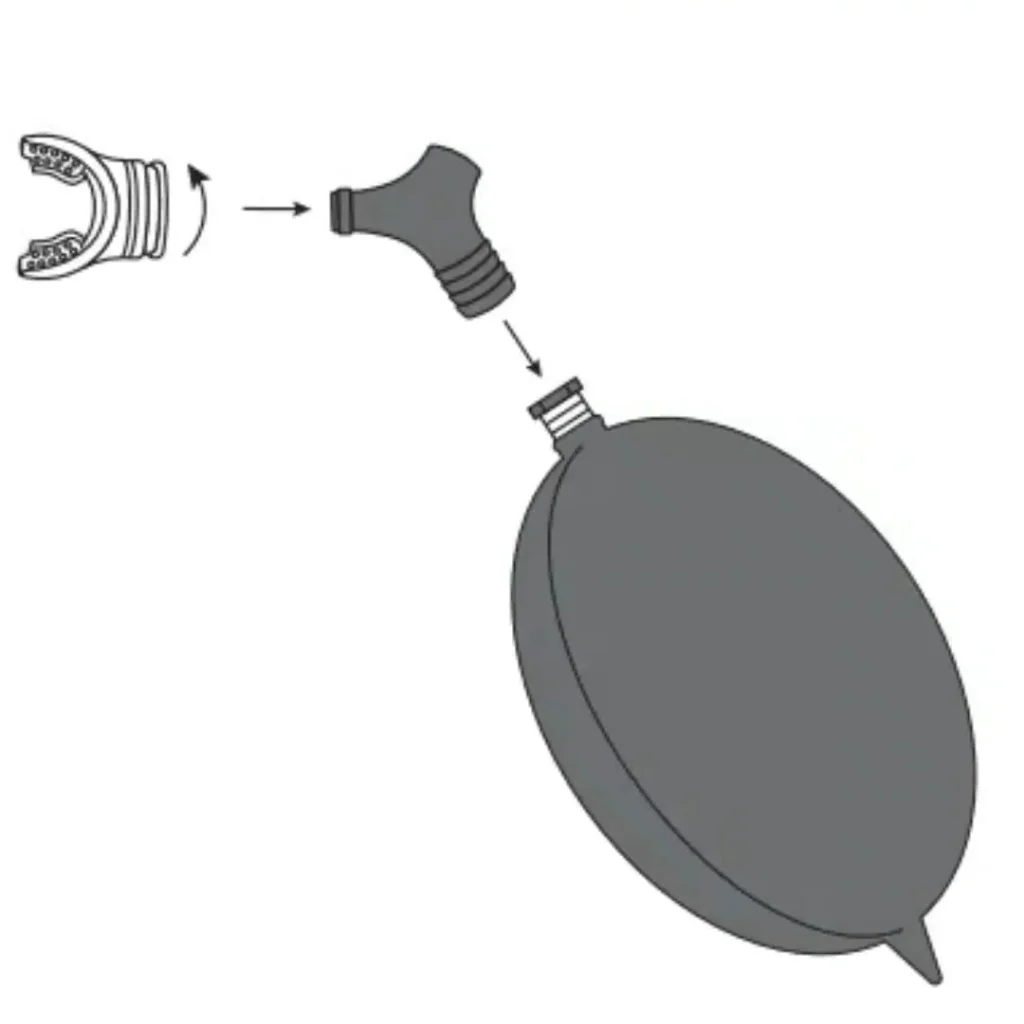
- Attach the BWB manifold to the breathing bag
- Put on the mouthpiece and optional nose clip
- Cue up the app with one of many free workouts
Step 2: Find Your Rhythm
- Start with slow, controlled breaths
- Breathe in through the mouthpiece, expanding the ribs and abdomen
- Breathe out fully into the bag — this recycles exhaled gases to maintain CO₂ balance
- Keep a smooth rhythm: don’t rush
Step 3: Load the Respiratory Muscles
- Choose a workout that challenges you to both use the full range of motion of your lungs and your ability to cycle that range faster and faster
- Use diaphragmatic control
- Avoid shrugging shoulders or recruiting neck muscles
- Stay relaxed — breathing should feel strong, not chaotic
Step 4: Train in Intervals
A standard session is 5–10 minutes, broken into controlled intervals like:
- 30 seconds load + 30 seconds easy
- 1 minute strong + 1 minute recovery
The Isocapnic app provides complete guided sessions, including warm-up, training sets, and progress tracking.
👉 Tip: The goal is controlled challenge, not gasping or overexerting.
📖Here’s 20 ways people use the Isocapnic BWB everyday
Why Other Devices Often Cause Dizziness
If you’ve ever tried a traditional breathing trainer and felt lightheaded, it’s because you were:
- Blowing off too much CO₂ (hyperventilating)
- Breathing too quickly
- Using too much resistance
- Not pausing between breaths
The BWB prevents this by rebalancing CO₂ naturally, so your brain stays perfused with oxygen-rich blood. You feel strong and can train longer without symptoms.
Mechanics Matter
Good breathing training requires good breathing mechanics:
✅ Fully expand the rib cage on inhale
✅ Control the exhale — don’t dump air
✅ Keep the tongue on the roof of the mouth when possible
✅ Maintain posture — tall spine, relaxed neck
✅ Smooth rhythm, no breath panic
Using a respiratory muscle trainer should make you feel grounded, powerful, and in control of your breath — not dizzy or anxious. That’s the difference between breathing training done right and breathing gimmicks.
How Long Should You Use a Breathing Trainer?
One of the best things about respiratory muscle training (RMT) is that it doesn’t require a big time commitment. You don’t need 45-minute sessions or complicated protocols — short, consistent training is far more effective.
Most people only need 5–10 minutes per day, 3–5 days per week to see results. That’s enough to create progressive overload and adaptation without causing fatigue or interfering with other training.
Recommended Training Dosage
| Goal | Weekly Frequency | Daily Duration | Total Time/Week |
|---|---|---|---|
| Health & Longevity | 3 days/week | 5–8 min | 15–25 min |
| Fitness & Conditioning | 4 days/week | 8–10 min | 32–40 min |
| Athletes & Endurance | 5 days/week | 10–15 min | 50–75 min |
| Peak Performance or Rehab | 5–6 days/week | 10–20 min | 60–120 min |
This is why respiratory training is so powerful — for less than 2% of your weekly training volume, you can improve stamina, recovery, breathing efficiency, and performance.
How Long to See Results
Adaptations happen fast. In most people:
- Week 1–2 → Better control + less breathlessness
- Week 3–4 → Noticeable gains in breathing strength and tolerance
- Week 6–8 → Strong performance gains in sport and training
- Week 10+ → Peak respiratory endurance and reduced breathing fatigue
These improvements stack even if you’re already fit. In fact, trained athletes sometimes see bigger improvements than beginners because their respiratory system becomes the limiting factor at higher intensities.
Maintenance Training
Once you build a strong breathing foundation, you can shift into maintenance mode:
- 2–3 sessions per week of 5–8 minutes
- Add a few higher-load sessions during performance phases
- Use recovery breathing or pre-performance activation sessions as needed
Breathing is like strength — use it or lose it. Maintenance keeps your diaphragm powerful and responsive year-round.
Why Consistency Beats Intensity
You wouldn’t go to the gym once a week and expect big gains. Same with breathing. People who get the best results train:
✅ Consistently
✅ Progressively
✅ With proper CO₂ balance
✅ With a structured plan
The Isocapnic BWB makes this easy with guided programs inside the Isocapnic training app, built for progressive improvement.
Do Lung Trainers Increase Stamina?
Yes — but not in the way most people think. Lung trainers don’t actually “strengthen the lungs” — they strengthen the muscles that power the lungs. That distinction matters.
Your lungs are passive. They don’t actively pull in air; they simply expand because your respiratory muscles — especially the diaphragm — create negative pressure to draw air in. When those muscles fatigue, you breathe harder, oxygen drops, and fatigue hits faster. So the key to improving stamina isn’t lung health — it’s breathing power and efficiency.
How Respiratory Training Improves Endurance
Improved stamina comes from three primary mechanisms:
1. Reduced Respiratory Fatigue
During exercise, respiratory muscles can steal up to 15% of your total energy output. When they fatigue, the brain triggers the respiratory metaboreflex, redirecting blood flow away from the working muscles (legs/arms) and back to the breathing system. This is a built-in survival reflex — and it kills endurance.
Training with a respiratory muscle trainer greatly delays this reflex, which means:
✅ Less breathlessness
✅ Less muscle fatigue
✅ Higher power output for longer
2. Improved Oxygen Utilization Efficiency
Breathing isn’t just about getting air in — it’s about delivering oxygen where it matters. Respiratory training improves:
- Minute ventilation efficiency (how much air per minute you actually use)
- Diaphragm fatigue resistance
- Breath rhythm and stability
- CO₂ tolerance — which unlocks better oxygen delivery using the Bohr effect
This is why combining respiratory muscle training with CO₂ balance, as with the Isocapnic BWB, leads to better endurance than traditional trainers.
3. Lower Perceived Effort (RPE)
Study after study shows RMT reduces the feeling of effort during training. When breathing no longer feels like the limiter, your brain allows you to push harder.
Example: A cyclist at 300 watts before RMT might feel like they’re working at RPE 8. After RMT, that same power might feel like an RPE 6. Less suffering = more speed.
Real Performance Numbers
- Cyclists: 3–5% faster time trials after RMT and 5-8% improvement in FTP amongst PRO level cyclists
- Rowers: 6–8% improvement in distance over 6 minutes
- Runners: 10–15% reduction in breathlessness
- Swimmers: improved hypoxic control and efficiency
- CrossFit athletes: better barbell cycling and met-con endurance
- Climbers: better high-altitude tolerance
Why Isocapnic Improves Stamina Better Than Other Devices
Traditional trainers improve inhalation strength, but ignore exhalation and destroy CO₂ balance. The Isocapnic BWB:
✅ Trains full breathing mechanics
✅ Improves CO₂ buffering under load
✅ Keeps you out of hyperventilation
✅ Increases ability to sustain effort
✅ Transfers better to real sport
If you want to build stamina that actually shows up in your training — respiratory muscle training belongs in your plan.
What Are the Benefits of Respiratory Training?
Respiratory training has been studied in sports science, clinical rehab, neurology, and even mental performance. It consistently delivers benefits that affect how you move, think, and recover.
Below are the top evidence-based benefits of training your breathing system:
1. Less Breathlessness During Exercise
Respiratory muscle fatigue is one of the main drivers of breathlessness. Training the diaphragm and intercostals reduces that “gasping for air” feeling during running, cycling, hiking, CrossFit, and MMA conditioning.
✅ You feel more in control
✅ You stay calmer at higher intensities
✅ You can push harder without panic breathing
2. Higher Endurance and Power Output
RMT delays the respiratory metaboreflex, meaning your body no longer diverts blood away from working muscles to assist breathing. This preserves power and improves stamina across long-duration efforts.
✅ More watts in cycling
✅ Faster splits for rowing/running
✅ Better repeatability in conditioning sessions
3. Stronger Diaphragm and Core Stability
Your diaphragm isn’t just a breathing muscle — it’s also part of your core stability system along with the abdominals, pelvic floor, and spinal muscles. Stronger breathing muscles improve trunk stability and movement efficiency.
✅ Better weightlifting and bracing
✅ Improved running economy
✅ Reduced risk of low-back collapse under fatigue
4. Improved Recovery and HRV
Slow, efficient exhalation during respiratory training increases vagal tone and reduces sympathetic stress. That means better heart rate recovery and a calmer nervous system.
✅ Better sleep
✅ Enhanced parasympathetic activation
✅ Less oxidative stress from training
5. Enhanced CO₂ Tolerance and Oxygen Delivery
CO₂ tolerance is a major determinant of breathing control. When trained properly, you become less sensitive to CO₂ buildup, which lets you sustain higher workloads with less discomfort.
✅ Lower respiratory frequency at race pace
✅ Better composure under fatigue
✅ Less cramping and “leg burn” feeling
6. Elevated Mental Focus and Stress Resilience
Respiratory training improves respiratory control under pressure, preventing panic breathing and keeping focus sharp in high-stress environments — whether that’s competition or life.
✅ More emotional control
✅ Better tactical decision-making
✅ Clearer thinking under fatigue
7. Better Breathing for Health and Longevity
For everyday people, better breathing improves quality of life by increasing lung efficiency and reducing exertional fatigue. It’s used in programs for long COVID, asthma, COPD, anxiety, and chronic fatigue.
✅ Easier walking, climbing stairs, daily activity
✅ Better respiratory function with age
✅ Improved pulmonary health
Why These Benefits Only Show Up with Complete Training
Most devices train one thing: inhalation strength. But breathing performance has four pillars: control, endurance, strength, and CO₂ tolerance. Only Isocapnic respiratory training (as in the Isocapnic BWB) trains all four.
That’s the difference between generic improvement and optimal performance development.
Are Respiratory Trainers Worth It?
If you’re training seriously — whether for performance, health, or longevity — a respiratory muscle trainer is one of the highest return-on-investment tools you can own. The breathing system adapts quickly, requires little time to train, and improves nearly every other area of physical capability.
But let’s be honest: not all respiratory trainers are worth it.
Many of them create side effects, don’t transfer to real-world breathing, or only train a small portion of the breathing system. The key isn’t whether respiratory trainers work — it’s which ones work best and which are worth your time.
The Problem with Most Breathing Trainers
Cheap devices that “add resistance” aren’t enough. They:
❌ Cause dizziness (CO₂ washout)
❌ Train only inhalation, not exhalation
❌ Use poor mechanics that reinforce bad breathing habits
❌ Provide no progressive overload framework
❌ Don’t translate to endurance or athletic performance
Some of them are even marketed as “lung expanders” — which is marketing nonsense. Your lungs don’t expand from resistance. Your muscles adapt, not your lungs.
What Makes a Respiratory Trainer Worth It?
A respiratory trainer is worth your time and money if it:
✅ Trains both inhalation and exhalation
✅ Supports progressive overload
✅ Improves CO₂ tolerance (not destroy it)
✅ Works without dizziness or hyperventilation
✅ Lets you train at real intensity
✅ Improves breathing rhythm and control
✅ Comes with structured programming for results
There’s only one system that checks all these boxes: Isocapnic Breathe Way Better (BWB).
Why Athletes Say It’s a No-Brainer Investment
- 5–10 minutes a day = measurable improvement.
- Improves both performance and recovery.
- Transfers to every sport and life activity.
- Provides objective resistance and measurable progression.
- Eliminates breathlessness as a limiter.
This is one of the rare training tools that removes limitations instead of just adding load. Most people train harder — respiratory training lets you train better.
If a tool helps you perform better, breathe easier, and recover faster — and it costs less than a set of good running shoes — it’s worth it.
What Is the Best Device for Strengthening the Lungs?
Let’s clear up a myth first: you can’t strengthen your lungs — but you can strengthen your breathing muscles and dramatically improve how efficiently your lungs work. So the real question is:
What is the best device for improving breathing performance?
Answer: The best respiratory muscle trainer is one that trains the entire breathing system safely and effectively — not just inhalation strength.
To understand what makes a device effective, you need a quick look at the evolution of breathing trainers.
The Evolution of Breathing Devices
| Generation | Type of Device | Example | Major Limitation |
|---|---|---|---|
| Gen 1 | Simple resistance tubes | Expand-A-Lung | No measurable progression |
| Gen 2 | Inspiratory muscle trainers (IMT) | POWERbreathe, Ultrabreathe | Only trains inhale, causes dizziness |
| Gen 3 | Threshold trainers (PEP/PEEP) | The Breather | Weak stimulus, poor CO₂ control |
| Gen 4 | Isocapnic Respiratory System | Isocapnic BWB | Full system training: safe, scalable, CO₂ balanced |
Why Most Devices Fall Short
Most competitors only offer linear inspiratory resistance — meaning they only make it harder to breathe in. But breathing isn’t just inhaling. You exhale under load too, stabilize with breath, and buffer CO₂ under pressure. Legacy devices ignore this reality.
Common problems with most lung trainers:
- ❌ They don’t train exhalation strength
- ❌ They cause hyperventilation
- ❌ They don’t scale intensity for athletes
- ❌ They ignore CO₂ tolerance
- ❌ They lack progressive programming
- ❌ They don’t transfer to real-world breathing
Why the Isocapnic BWB Is Different
The Isocapnic Breathe Way Better trainer is the world’s first closed-loop respiratory muscle training system that:
✅ Trains both inhalation and exhalation
✅ Prevents dizziness by maintaining CO₂ balance
✅ Builds endurance, rhythm, and breathing control
✅ Trains under load — even while moving
✅ Includes progressive training protocols in the app
✅ Delivers results in as little as 5–10 minutes a day
This isn’t just another plastic tube with resistance. It’s literally a new category of respiratory training.
👉 Check it out here: Isocapnic Breathe Way Better System
Head-to-Head Comparison
| Feature | POWERbreathe | The Breather | Expand-A-Lung | Isocapnic BWB |
|---|---|---|---|---|
| Inhale resistance | ✅ | ✅ | ✅ | ✅ |
| Exhale resistance | ❌ | ✅ (weak) | ❌ | ✅ (strong + controlled) |
| Prevents CO₂ loss | ❌ | ❌ | ❌ | ✅ |
| Safe for longer training | ❌ | ⚠️ | ⚠️ | ✅ |
| Full respiratory system | ❌ | ❌ | ❌ | ✅ |
| Works during movement | ❌ | ❌ | ❌ | ✅ |
| Includes training app | ❌ | ❌ | ❌ | ✅ |
| Best for athletes | ⚠️ | ❌ | ❌ | ✅ |
| Best overall | ❌ | ❌ | ❌ | ✅ ✅ ✅ |
If you want the most effective respiratory muscle trainer — the one that trains the entire system and produces measurable results — the Isocapnic BWB is in a class of its own.
Why Isocapnic Is the Best Respiratory Muscle Trainer
The Isocapnic Breathe Way Better (BWB) isn’t just another breathing gadget — it’s a scientifically engineered respiratory performance system. Designed by respiratory physiologists and performance coaches, it solves every major limitation found in previous breathing trainers.
Here’s what separates Isocapnic from everything else:
✅ 1. Trains the Full Breathing System
Most devices only train inhalation strength, which is incomplete. The BWB trains:
- Diaphragm strength
- Intercostal expansion
- Full exhalation control
- Rib cage mobility
- Breath rhythm
- Gas exchange efficiency
This is complete breathing development, not partial stimulus.
✅ 2. Closed-Loop CO₂ Balance = Safer + More Effective
Traditional trainers blow off too much CO₂, causing dizziness and hyperventilation. The BWB prevents this with a closed-loop rebreathing system, which maintains physiological CO₂ levels.
This allows:
- Longer training sessions
- Better buffering and lactate tolerance
- Clearer head during breathing work
- Nervous system stability
- Real adaptation
This is where isocapnic breathing beats traditional IMT devices.
✅ 3. Self-limiting Resistance
Unlike fixed-resistance gimmicks, Isocapnic lets users progressively load both inhalation and exhalation.
- Self-limiting resistance control
- Builds breathing strength like weight training
- Adaptive to all levels — from rehab to elite sport
✅ 4. The Only System Built for Performance Under Load
Breathing changes dramatically during movement. The BWB is built for use during training, not just sitting in a chair.
You can use BWB:
- Before workouts for activation
- Between sets to train resilience
- After training to accelerate recovery
- During loaded sessions (bike, treadmill, ski erg) for advance gas exchange conditioning
This is real-world respiratory performance.
✅ 5. Backed by App-Based Training Programs
The Isocapnic Training App guides users step-by-step through progressive programs for:
- Endurance
- Strength
- CO₂ tolerance
- High-intensity conditioning
- Recovery and nervous system regulation
- Sport-specific plans
This means you don’t need to guess. Just press start and train.
✅ 6. Used by Professionals Around the World
The BWB is trusted by:
- Endurance athletes
- Combat athletes
- Professional Sports: NHL, NFL, CFL, MLB, NBA, NRL, AFL, MLS, FIFA and more
- CrossFit pros
- Special operations and tactical teams
- Physiotherapists and rehab specialists
- Breathwork professionals
- Longevity and wellness practitioners
This is not a niche wellness gadget — it’s a universal breathing tool.
✅ 7. Engineered for Everyone
Whether you want to:
- Breathe better during sport
- Increase energy and resilience
- Recover better between intervals
- Reduce anxiety and stress breathing
- Improve lung function
- Age actively and stay capable
The Isocapnic BWB meets you where you are and builds you up step by step.
This is the future of respiratory training — powerful, safe, intelligent, and adaptable.
👉 Learn more or order your BWB here
How to Get Started With Respiratory Muscle Training
Getting started with respiratory training is simple — and like any training system, it works best with structure and progression. You don’t need to already “know how to breathe.” You just need a plan and the right tool.
Here’s how to start building stronger breathing in less than 10 minutes a day:
Step 1: Choose the Right Device
If you want real results, choose a respiratory trainer that:
✅ Trains inhale and exhale
✅ Protects CO₂ balance
✅ Scales challenge over time
✅ Supports progressive overload
✅ Includes guided programs
The only device that checks all of these boxes is the Isocapnic Breathe Way Better (BWB) system:
👉 Learn more about the Isocapnic respiratory trainers
Step 2: Pick Your Training Goal
There are different ways to train your breathing depending on your objective:
| Goal | Training Focus |
|---|---|
| Reduce breathlessness | CO₂ tolerance + rib control |
| Boost endurance | Respiratory muscle endurance |
| Increase power | Respiratory strength loading |
| Improve recovery | Parasympathetic breathing/ CO₂ loading |
| Stress resilience | Controlled exhale protocols |
| Longevity & health | Low-intensity daily sessions |
The Isocapnic App lets you select these goals and auto-builds your program.
Step 3: Start with 5–10 Minutes Per Day
Begin with short sessions you can sustain consistently:
- Beginner plan: 5 minutes/day, 4 days/week
- Intermediate plan: 8–10 mins/day, 5 days/week
- Advanced plan: 12–15 mins/day + loaded days
Consistency beats intensity. Your diaphragm responds quickly to training — most people feel results in 2–3 weeks.
Step 4: Use It Before Training to Unlock Better Sessions
For athletes and fitness users, the biggest performance hack is using the BWB before your workouts.
A 3–5 minute BWB warm-up:
✅ Increases blood flow
✅ Activates diaphragm
✅ Reduces early breathlessness
✅ Delays fatigue
✅ Improves overall session quality
Step 5: Track Progress and Increase Challenge
Progressive overload applies to breathing just like strength training. Increase difficulty by:
- Increasing resistance
- Increasing interval length
- Reducing rest periods
- Increasing total session time
The Isocapnic App tracks your performance and adjusts training automatically so you always improve.
Step 6: Carry Your Breath Into Life and Sport
Breathing is a skill you use everywhere. Train it smart, and your body follows:
✅ Move better
✅ Recover faster
✅ Think clearer
✅ Perform stronger
Respiratory training doesn’t just change how you breathe — it changes how you live, train, and compete.
Breathe Stronger. Perform Better. Live Better.
Your breathing system is the most important performance system in your body — and also the most neglected. Whether you’re an athlete, a coach, or someone who just wants to feel and function better, training your respiratory muscles unlocks massive gains in stamina, resilience, recovery, and mental control.
But as you’ve seen, not all respiratory trainers are created equal.
Most devices ignore CO₂ balance. These don’t train exhalation strength. They reinforce poor mechanics. They lack progression. That’s why so many people try a breathing trainer once… and never feel a real difference.
The Isocapnic Breathe Way Better (BWB) changes that.
It’s built on real physiology and real results. Isocapnic strengthens breathing without dizziness. It builds adaptation through progressive overload. It delivers repeatable improvements in performance and breathing efficiency. And it does all this in only 5–10 minutes a day.
This isn’t breathwork. It isn’t another plastic gimmick.
This is structured respiratory training for real human performance.
If you’re ready to:
✅ Stop feeling breathless
✅ Build powerful, fatigue-proof breathing
✅ Improve your endurance and training performance
✅ Increase CO₂ tolerance and oxygen efficiency
✅ Train smarter in less time
✅ Take control of your physiology—anytime, anywhere
Then you’re ready for Isocapnic.
🔥 Start Your Training Today
👉 Shop the Isocapnic Breathe Way Better System here
💡 Bonus: The Isocapnic App includes free training sessions to help you get started fast, even if you’ve never trained your breathing before.
Your breath has always been automatic. Now it can be unbeatable.
References
- Illi, S. K., Held, U., Frank, I., & Spengler, C. M. (2012). Effect of respiratory muscle training on exercise performance in healthy individuals: a systematic review and meta-analysis. Sports Medicine, 42(8), 707–724.
- Romer, L. M., McConnell, A. K., & Jones, D. A. (2002). Effects of inspiratory muscle training on time-trial performance in trained cyclists. Journal of Sports Sciences, 20(7), 547–590.
- Johnson, B. D., Babcock, M. A., Suman, O. E., & Dempsey, J. A. (1993). Exercise-induced diaphragmatic fatigue in healthy humans. Journal of Physiology, 460, 385–405.
- Hajghanbari, B., Yamabayashi, C., Buna, T. R., Coelho, J. D., Freedman, K. D., Morton, T. A., & Sheel, A. W. (2013). Effects of respiratory muscle training on performance in athletes: a systematic review with meta-analyses. Journal of Strength and Conditioning Research, 27(6), 1643–1663.
- Lomax, M., & McConnell, A. K. (2003). Inspiratory muscle fatigue in swimmers after a single 200 m swim. Journal of Sports Sciences, 21(8), 659–664.
- McConnell, A. K., & Romer, L. M. (2004). Respiratory muscle training in healthy humans: resolving the controversy. International Journal of Sports Medicine, 25(4), 284–293.
- Harms, C. A., Babcock, M. A., McClaran, S. R., Pegelow, D. F., Nickele, G. A., Nelson, W. B., & Dempsey, J. A. (1997). Respiratory muscle work compromises leg blood flow during maximal exercise. Journal of Applied Physiology, 82(5), 1573–1583.
- Gething, A. D., Williams, M., & Davies, B. (2004). Inspiratory resistive loading improves cycling capacity: a placebo controlled trial. British Journal of Sports Medicine, 38(6), 730–736.
- Shei, R.-J. (2018). Recent advancements in our understanding of the ergogenic effect of respiratory muscle training in healthy humans: A systematic review. Journal of Strength and Conditioning Research, 32(9), 2665–2676.
- Babcock, M. A., Pegelow, D. F., Johnson, B. D., & Dempsey, J. A. (1995). Aerobic fitness effects on exercise-induced low-frequency diaphragm fatigue. Journal of Applied Physiology, 78(1), 82–92.
- Brown, R. P., & Gerbarg, P. L. (2005). Sudarshan Kriya Yogic breathing in the treatment of stress, anxiety, and depression: Part II—clinical applications and guidelines. Journal of Alternative and Complementary Medicine, 11(4), 711–717.
- Johnson MA, Sharpe GR, Brown PI. Inspiratory muscle training improves cycling time-trial performance and anaerobic work capacity but not critical power. Eur J Appl Physiol. 2007 Dec;101(6):761-70.
- Kowalski T, Dias Rodrigues G, Zanini M. Application of respiratory muscle training for improved intermittent exercise performance in team sports: a narrative review. Frontiers in Sports and Active Living. 2025;7:1632207. doi:10.3389/fspor.2025.1632207.
- Ricci C, Bouverot Z. Effects of Respiratory Muscle Training and Ventilatory Strategies on the Performance of Professional Cyclists: A 48-Week Longitudinal Analysis. (2025). [Full title/source as per original].