
If you are using the Isocapnic BWB, or thinking about it, one of the biggest questions is usually this:
Where does this fit into my training?
That is a fair question.
A lot of athletes understand how to think about integrating Isocapnic training Into their athletic development. They have felt the panic of not being able to get enough air at the end of a hard interval. They have felt themselves lose composure when the intensity rises. They have experienced what happens when the system starts to tighten up, breathing gets shallow, and performance begins to slide.
What is less clear for many people is how to actually integrate respiratory training in a smart way.
This is where athletes can get stuck. They know breathing matters, but they do not know whether they should use the device before training, during training, after training, or as its own workout. They do not know whether they should keep things simple or try to get fancy. They do not know whether they need testing first, or whether they are advanced enough to benefit.

The good news is that there is a framework for this.
You do not need to guess.
You do not need to treat Isocapnic training as something random that you just toss into your week and hope helps. You can think about it in phases. You can build it in a way that makes sense. You can start simple, get real value right away, and then layer on more advanced methods only when they make sense for you.
That is how we think about it.
At Isocapnic, we tend to organize the integration of respiratory training into four stages:
- Warm-ups
- Specific focused respiratory training
- Advanced methods
- Breathing strategies
These stages are not meant to make things complicated. They are meant to make things clear. Here are 20 ways to leverage your BWB in training.
Think of them like a path. Or better yet, think of them like a pyramid.
The base of the pyramid is warm-up work. That is where most athletes should start. For many people, that may be where most of the value lives for a long time. If you only ever used the Isocapnic BWB as a warm-up tool before your training sessions, you would still get major benefits.
Then, if you want more, you can build upward.
You can start using the device as its own training modality. You can explore advanced methods for gas exchange, recovery, altitude preparation, and higher-end performance stress. Then, over time, you can develop real ownership over your breathing and start using it as a true performance strategy.
This article is here to help you understand that progression.
It is not meant to give you every possible workout. It is meant to help you understand how to think about the system, how the stages fit together, and where you should start.
Because once you understand the framework, you stop seeing breathing as an afterthought.
You start seeing it for what it really is.
A trainable system that can change your performance.
Before You Think About Complexity, Start With Stage One
If you take one thing from this article, let it be this:
Do not underestimate the power of warm-ups. Stage one is the simplest way to use Isocapnic training, and for a huge percentage of athletes it is the most valuable place to begin. At the most practical level, stage one is the free five-minute warm-up available in our app.

It is short. It is simple. It is easy to repeat. And it is one of the best ways to start building value with the device right away.
If you did that warm-up before every workout you perform, whether that is endurance training, lifting, sparring, intervals, team training, or a race-day preparation, you would be doing something very meaningful for your performance.
In fact, if an athlete told me they were only ever going to use the device as a warm-up tool, I would still be very happy with that.
Would it be the full expression of what Isocapnic training can do? No.
Would it still be highly valuable? Absolutely.
What Stage One Is Actually Doing
Most athletes do not think about warming up their respiratory system.
They think about warming up muscles. They think about mobility. They think about heart rate. They think about activation drills. But they do not spend much time thinking about the mechanics and physiology of breathing before they ask their body to perform.
That is a mistake.
Ventilation is central to energy production and performance. If your ability to move air is limited, then your ability to support output is limited too.
A good respiratory warm-up helps prepare the system in several ways.
First, it helps improve range of motion in the structures involved with breathing. That includes the diaphragm, the rib cage, and the muscles and joints that need to move well if you want to breathe deeply and effectively.
Second, it helps increase access to tidal volume. In simple terms, that means you are improving the amount of useful breath you can access as you go into the session.
Third, it helps prime the respiratory muscles before the workload rises. Rather than waiting for the system to wake up under stress, you are giving it the chance to come online before it is under pressure.
Fourth, it can help set up the internal environment for better performance. When you use the system properly, you are supporting bronchodilation, vasodilation, circulation, and the body’s ability to move oxygen where it is needed.
That matters.
If you can improve blood flow, improve air movement, and improve oxygen delivery before the session really starts, you are not just feeling more ready. You are more ready.
This is one of the reasons stage one punches so far above its weight.
It is not complicated, but it is powerful.
Who Should Live in Stage One?
A lot of people.
If you are a busy athlete with limited time, stage one may be the best return on investment you can get. If you are already trying to fit training into a packed work schedule, a five-minute warm-up that makes the rest of your session more effective is a pretty compelling tool.
If you are an elite athlete and every detail matters, stage one still matters.
If you are new to respiratory training, stage one is where you should begin.
If you are experienced and already doing more advanced work, stage one should still remain part of your foundation.
This is why I like the pyramid image.
Warm-up work is not just the beginner stage. It is the base layer. The wider and stronger that base becomes, the more intelligently you can build on top of it.
Stage Two: Using Isocapnic Training as the Workout
Once you understand the value of the warm-up, the next step is to realize that the Isocapnic BWB does not only prepare you for training.
It can be the training.
This is the shift that defines stage two.
Instead of thinking, “I use the device before my workout,” you begin thinking, “I am doing a workout for my respiratory system.”
That is a meaningful change.
In stage one, the device supports the session that follows.
In stage two, the device becomes the session.
This is where respiratory training becomes more specific, more targeted, and more individualized.
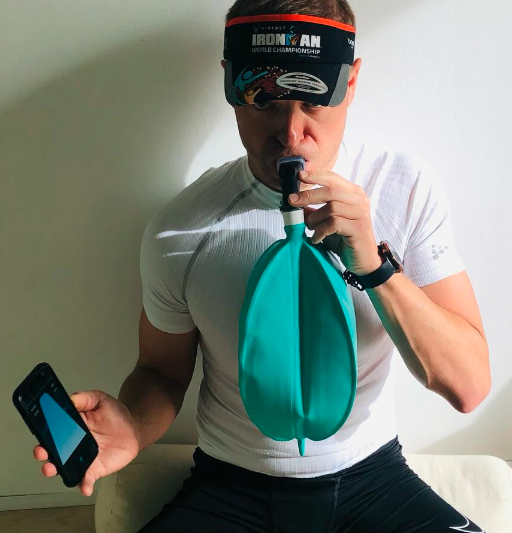
It might still be simple. A five- or ten-minute balanced session can be a great place to start. But now the goal is different. You are no longer just priming the system. You are trying to improve it.
What Are You Trying to Improve?
Broadly speaking, stage two helps you develop the structures and functions involved with breathing.
Some athletes need more structure.
Some athletes need more function.
Some need both.
That is why we often think about athletes in three broad profiles:
- structurally limited
- functionally limited
- balanced
The Structurally Limited Athlete
A structurally limited athlete needs more capacity in the structures involved with breathing.
This is the athlete who would likely benefit from bigger usable lung volumes, more range, and more development of the physical structures that support breathing.
In plain English, this athlete needs to build the system.
They may feel like they run out of space. They may not be accessing the volumes you would expect. They may need more expansion, more motion, and more structural development.
For that athlete, training should focus on building the structures that drive respiration.
The Functionally Limited Athlete
A functionally limited athlete has decent structures, but does not use them as well as they should.
This athlete may have good tidal volume available, but struggle to sustain it. They may need more respiratory endurance. They may need better inspiratory or expiratory power. They may need to move through range faster and more efficiently as intensity rises.
In plain English, the parts are there, but the performance of the parts needs to improve.
This athlete does not only need more breathing. They need better breathing under demand.
The Balanced Athlete
The balanced athlete needs training that addresses both sides.
They may not have one obvious major weakness, but they still benefit from developing both structure and function. For many athletes, this is a very effective entry point.
It gives them a broad stimulus and helps create well-rounded development across the respiratory system.
Why Stage Two Matters So Much
The reason stage two matters is that it changes how you think about the respiratory system.
Most athletes train legs, arms, trunk, engine, speed, power, and skill with intention.
Very few train their breathing with the same respect.
That does not make sense.
If your respiratory system is one of the main things supporting your ability to produce energy, control effort, tolerate intensity, and recover between surges, then it deserves specific training just like any other key system.
And for most people, it does.
In our experience, over 70 percent of high-performing athletes show the respiratory system as their primary limitation. Another large group shows it as a major secondary limitation. Only a very small percentage show up already so strong in this area that it would clearly rank as a major strength from the start.
That means respiratory training is not niche.
It is not a side quest.
It is one of the main opportunities most athletes have to improve.
This is also why testing can be nice to have, but not a requirement for starting.
Objective data is useful. It can help guide emphasis. It can help track progress. But you do not need a test result to justify caring about your breathing.
For most athletes, there is very little downside.
If breathing is a weakness, you improve a weakness.
If breathing is already a strength, you reinforce a strength.
Either way, you are investing in a system that matters.
Stage Three: Advanced Methods
Stage three is where the conversation gets more nuanced.
This is where you start exploring methods that place more stress on gas exchange, greater demands on your awareness, and more responsibility on the athlete or coach to manage the process intelligently.
This is also the stage where toughness can become a problem.
That is worth saying clearly.
Many athletes are good at suffering. Many athletes are proud of being able to push. In a lot of training environments, that attitude can be useful.
Here, it can get in the way.
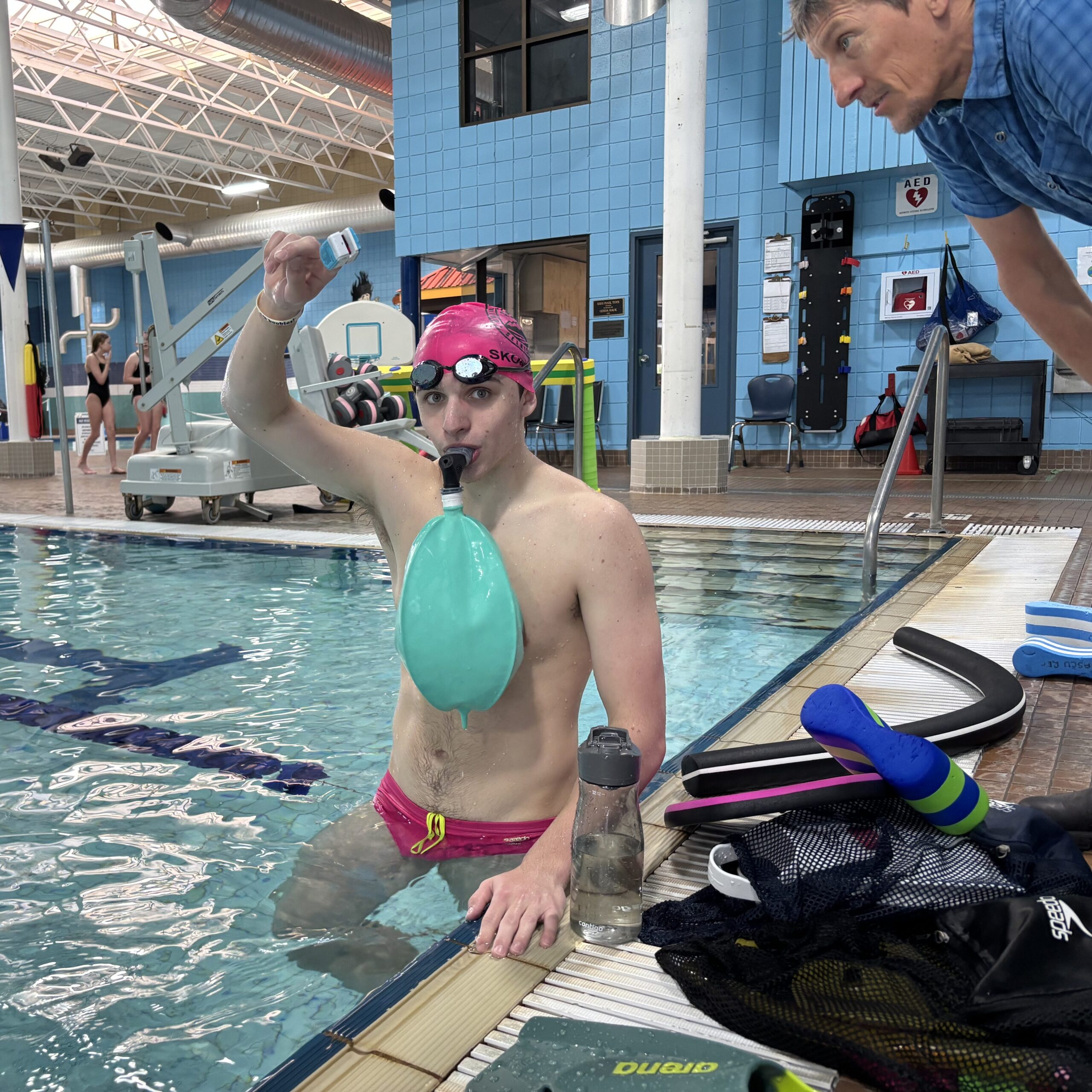
Advanced methods are not about proving how hard you can go.
They are about learning how your system responds, respecting those responses, and progressing in a way that is both safe and productive.
The general rule here is simple:
Start low, go slow, and listen to your body.
If you are drifting into headache, dizziness, or symptoms that tell you the system is going too far out of balance, that is not the goal.
This is one reason advanced methods are often best done with oversight. A knowledgeable coach, a skilled practitioner, or simple tools like a pulse oximeter can help keep the process grounded and safe.
What Belongs in Stage Three?
Stage three is mostly about more advanced manipulation of gas exchange.
That can include:
- hypercapnic work
- altitude or altitude simulation exposure
- high-intensity isocapnic interval work
- more integrated stress-based methods
- recovery and downregulation sessions that intentionally influence internal chemistry
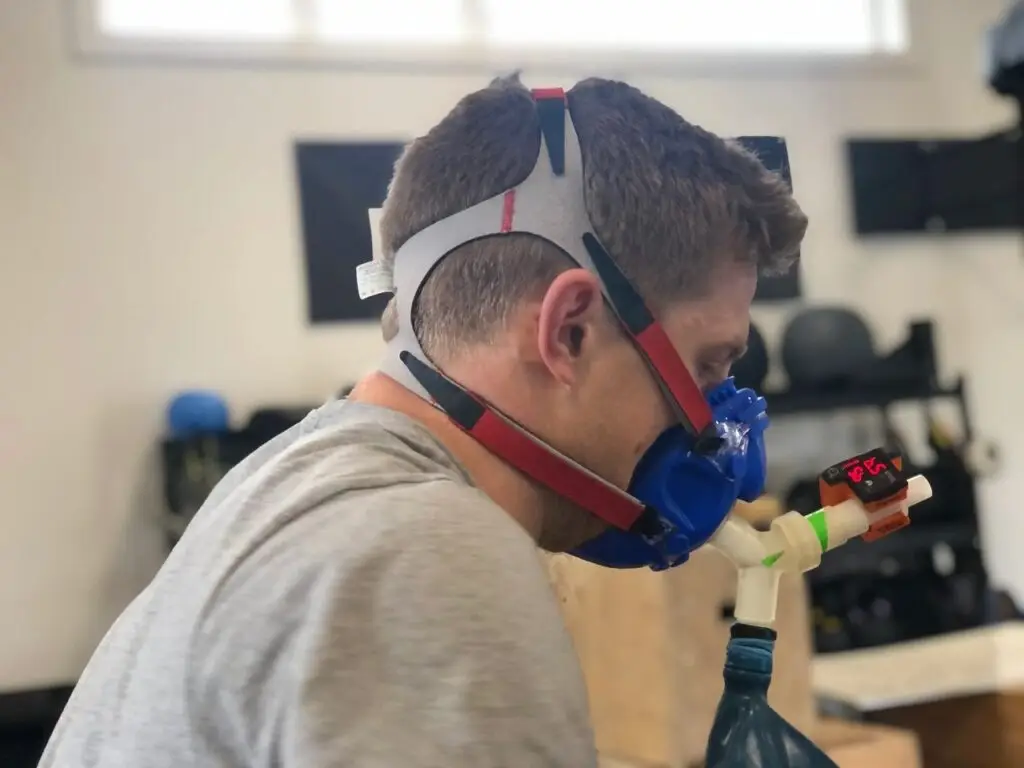
This is a broad category, but the common thread is that you are no longer just warming the system up or training it in a basic isolated way.
You are now asking it to adapt under more specific and more demanding conditions.
High-End Stress and Tolerance
At this level, respiratory training can help the athlete improve their ability to cope with rising CO2, rising intensity, and the stress that comes with high-performance output.
This matters at altitude.
It matters in sports with repeated hard surges.
It matters in events where the breathing response can become a limiter before the muscles themselves are truly done.
It matters anywhere the athlete needs to remain functional and composed while the internal load is climbing fast.
Recovery Is Part of Advanced Work Too
Not all advanced work is about going harder.
Some of it is about recovering better.
This is where downregulation and slow breathing sessions fit in.
At the end of a hard day, or before bed, very slow breathing sessions can help shift the body toward recovery. These sessions help the athlete move away from the state of being wound up, overactivated, and locked into the stress of training and life.
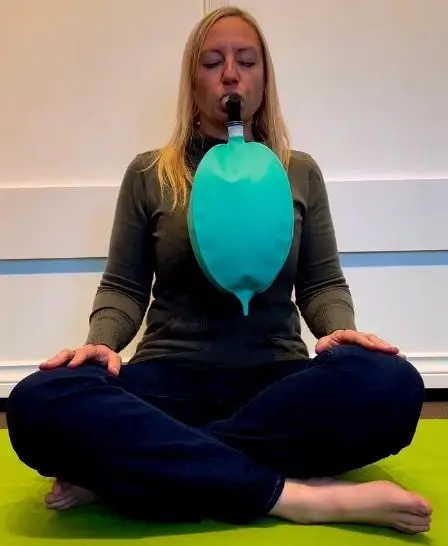
They can help encourage a calm, vasodilated state. They can help support circulation. They can help improve the delivery of oxygen and nutrients to tissue that has been stressed by training.
That makes them highly practical.
Recovery is not just what happens when you stop training. Recovery is a process you can support.
Breathing can be one of the tools that helps you do it.
This is another reason the framework matters.
If you only think of respiratory training as something you do before or during hard work, you miss one of its most useful applications.
Stage Four: Breathing Strategies
This is where things get really interesting.
Stage four is not mainly about the device anymore.
It is about what you have learned from the device.
It is about carrying that awareness into sport.
It is about having ownership over your breathing instead of letting your breathing be purely an automatic reaction to stress.
Most athletes think of breathing as something that simply happens when effort rises.
The load goes up. The breathing goes with it.
That is normal, but it is incomplete.
The highest level of respiratory mastery is learning to use breathing as a tool that helps drive the system, rather than just reacting to what the system is feeling.
This is what we mean by breathing strategy.
Breathing as a Performance Lever
A good breathing strategy can influence your physiology before the effort, during the effort, and in transitions within the effort.
At an easier endurance pace, an athlete may choose to breathe deeply and slowly in order to stay relaxed, keep the system vasodilated, and remain prepared for what comes next.
That is strategy.
A biathlete coming into the range may need a very different strategy. In that setting, over-breathing before shooting can help reduce CO2 and create more room for it to build while the athlete is trying to settle and shoot accurately.
That is also strategy.
These examples are different, but the principle is the same.
You are not just breathing because the sport is making you breathe.
You are using breathing to shape the demands of the moment.
That changes everything.
Decoupling From Automatic Stress Response
One way to think about stage four is this:
You are learning to decouple breathing from the automatic stress response.
That does not mean you ignore your body.
It means you stop being fully controlled by it.
You develop enough awareness, control, and skill that you can make better decisions about how to breathe depending on the task.
Sometimes that means calming the system.
Sometimes that means increasing drive.
Sometimes that means preserving control under pressure.
Sometimes that means preparing your chemistry for what is about to happen next.
This is where respiratory training starts to become real performance strategy, not just conditioning.
Do These Stages Need to Happen in Order?
Yes and no.
They build on each other, but that does not mean every athlete moves through them in a perfectly linear way.
Think of stage one as the foundation.
Think of stage two as deliberate development.
Think of stage three as advanced application.
Think of stage four as mastery.
That is the general shape.
But in real life, these stages can overlap.
An athlete may use the warm-up before every session, do specific respiratory training two or three times per week, use recovery breathing in the evening, and still be working on better breathing strategy during easy endurance sessions.
That is normal.
The point is not rigid sequencing.
The point is understanding what each stage is for.
Once you understand that, integration becomes much easier.
Common Mistakes Athletes Make
The good news is that phase one and phase two are actually hard to mess up.
That is one of the strengths of the system.
The most common mistakes tend to happen when athletes jump too quickly into stage three without enough awareness.
The main mistake is thinking that more is always better.
It is not.
With advanced methods, toughness is not the goal. Awareness is the goal.
If your body is giving you signs that things are moving too far out of balance, the answer is not usually to force your way through it. The answer is to back off, learn, and progress more intelligently.
Another mistake is chasing complexity before consistency.
A lot of athletes would get much more value from simply using the warm-up before every training session than from dabbling in advanced methods once in a while.
Do not skip the easy wins.
Do not overlook the base of the pyramid.
And do not confuse sophisticated training with effective training.
The simplest application done consistently often produces the biggest return.
Where Testing Fits
Testing is useful, but it is not a gatekeeper.
If you have access to good respiratory testing, that information can help. It can show whether you are more structurally limited, more functionally limited, or relatively balanced. It can guide emphasis. It can help measure improvement over time.
That is all valuable.
But waiting for perfect testing before you begin is not necessary.
For the vast majority of athletes, respiratory training belongs in the program.
Not because it is trendy.
Because the respiratory system is very often a real limiter.
That is what we see again and again.
And even in the small number of athletes who start with an already strong respiratory system, there is still very little downside to reinforcing that strength.
So yes, testing is nice to have.
No, it is not required to begin.
The Big Takeaway
The biggest mistake you can make with Isocapnic training is thinking it has to be all or nothing.
It does not.
This system meets you where you are.
If all you ever do is use it as a warm-up tool, you can get tremendous value.
If you want more than that, there is a clear path.
You can move into specific respiratory training. You can build into advanced methods. You can start developing breathing strategies that change how you perform under pressure.
That is the beauty of the framework.
It can be simple.
It can be nuanced.
It can support the athlete with only a few hours a week to train.
It can support the athlete who is chasing every last percent.
And it gives both of them the same thing:
A smarter way to think about breathing.
So if you are wondering where to start, start at stage one.
Build the habit of warming up your respiratory system before training.
Let that become your base.
Then, when you are ready, build upward.
That is how you get the most out of the system.
Not by doing everything at once.
By understanding what each stage is for, using it well, and progressing with purpose.
Because breathing is not just something that happens while you train.
It is one of the systems shaping how well you can train in the first place.
And once you start treating it that way, a lot begins to change.
Related Reading
If you want to go deeper into specific parts of this framework, these articles are a great next step:
- What Is Respiratory Muscle Training and Why Does It Matter?
- Finding the Ideal Training Load: Isocapnic Respiratory Training
- Using the Isocapnic BWB Between HIIT Sets Improves Recovery
- How to Increase Lung Capacity with Isocapnic
- How to Strengthen Your Lungs and Breathing Muscles
- How Effective Is Breath Training?
The goal of this article is not to give you every answer in one place.
The goal is to give you the map.
From here, you can decide how far you want to go.


