How Isocapnic is helping one of the world’s most accomplished HYROX athletes take his conditioning to another level.
By Luke Way
When you’re working with an athlete like Hunter McIntyre, the challenge isn’t teaching him how to work hard. He’s built an incredible career doing exactly that.
The challenge is identifying where there is still room for improvement and developing those areas without compromising the qualities that have made him such a dominant athlete.
As Hunter enters his final season in HYROX, I’m incredibly excited to be working alongside Brent Fikowski and David Spurr. Each of us brings a distinct and complementary area of expertise to Hunter’s development.
David leads the strength and functional movement side of the program, Brent brings an unmatched ability to identify inefficiencies in race execution and uncover opportunities for performance improvement, and I’m responsible for Hunter’s endurance development and respiratory conditioning.
Together, we’re working to help an already exceptional athlete reach another level of performance.

Finding Another Gear
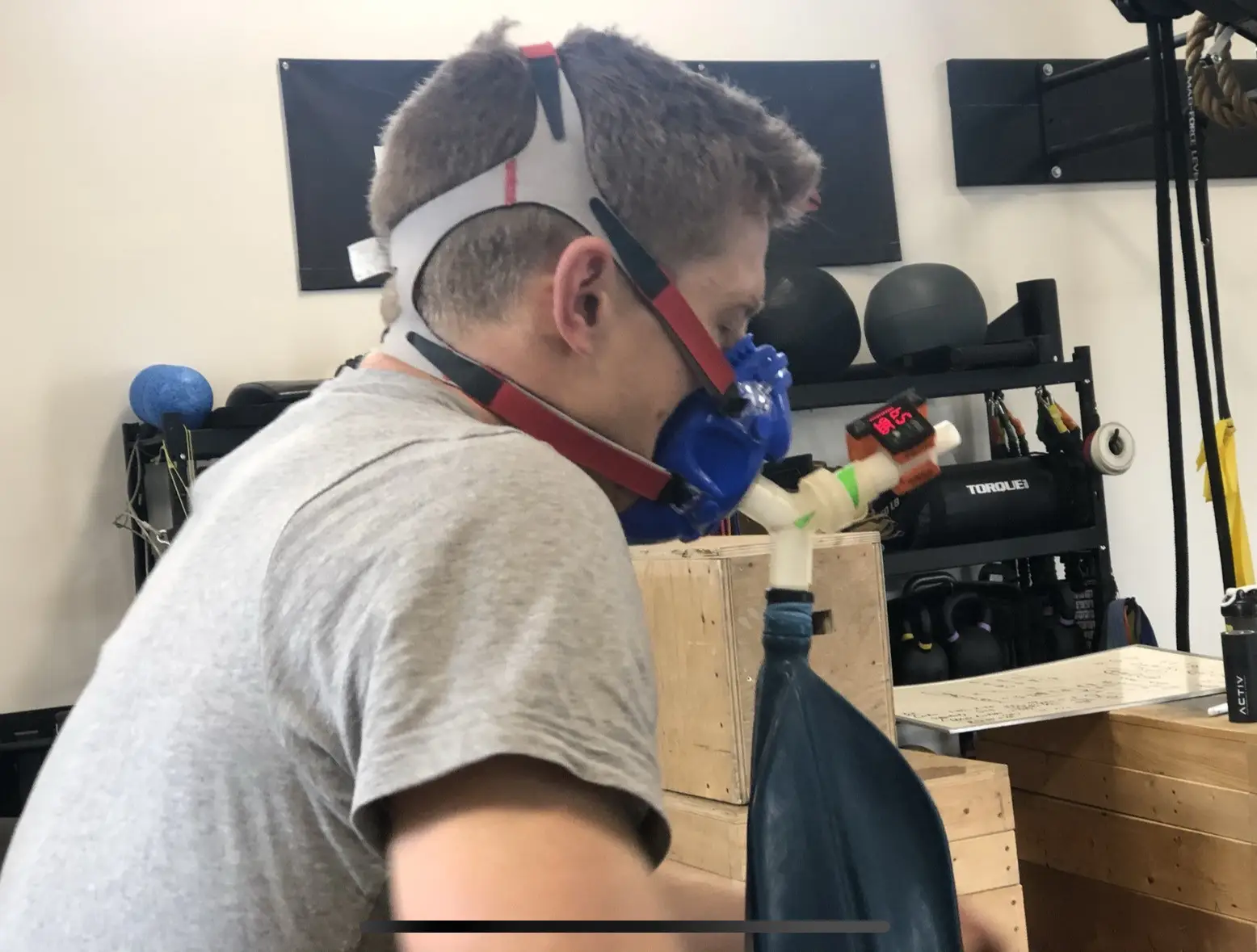
When I initially reviewed Hunter’s VO2 assessment alongside his feedback from training and racing, I identified an exciting physiological opportunity.
Hunter already possesses an exceptional aerobic engine. However, when he approached or exceeded a particular intensity, known as his second ventilatory threshold (VT2), sustaining his performance over repeated hard efforts became increasingly costly.
In a sport like HYROX, where athletes repeatedly transition between demanding strength-based stations and fast running, managing that physiological cost is critical.
Our objective isn’t simply to help Hunter go harder. It’s to help him go harder, more often, and with fewer consequences.
Creating More Breathing Room
Every athlete has an exercise intensity at which breathing becomes significantly more demanding. We refer to this as VT2.
Every athlete also has a maximum ventilatory output, essentially the greatest volume of air they can move through their respiratory system during maximal exercise.
What we’re particularly interested in is the space between those two numbers.
Think of it as physiological headroom. An athlete with more ventilatory capacity available above their threshold may be better equipped to handle the demands of racing at or around that threshold and repeatedly pushing beyond it.
Rather than constantly operating close to the ceiling of their respiratory capabilities, they have another gear available when they need it.
That’s the capacity we’re working to develop with Hunter.
Training the Engine and Expanding Its Capacity
My approach combines two complementary areas of conditioning.
The first is traditional endurance development. Through consistent, controlled aerobic training, we’re working to improve Hunter’s ability to produce energy efficiently, manage fatigue and sustain his performance throughout an entire race.
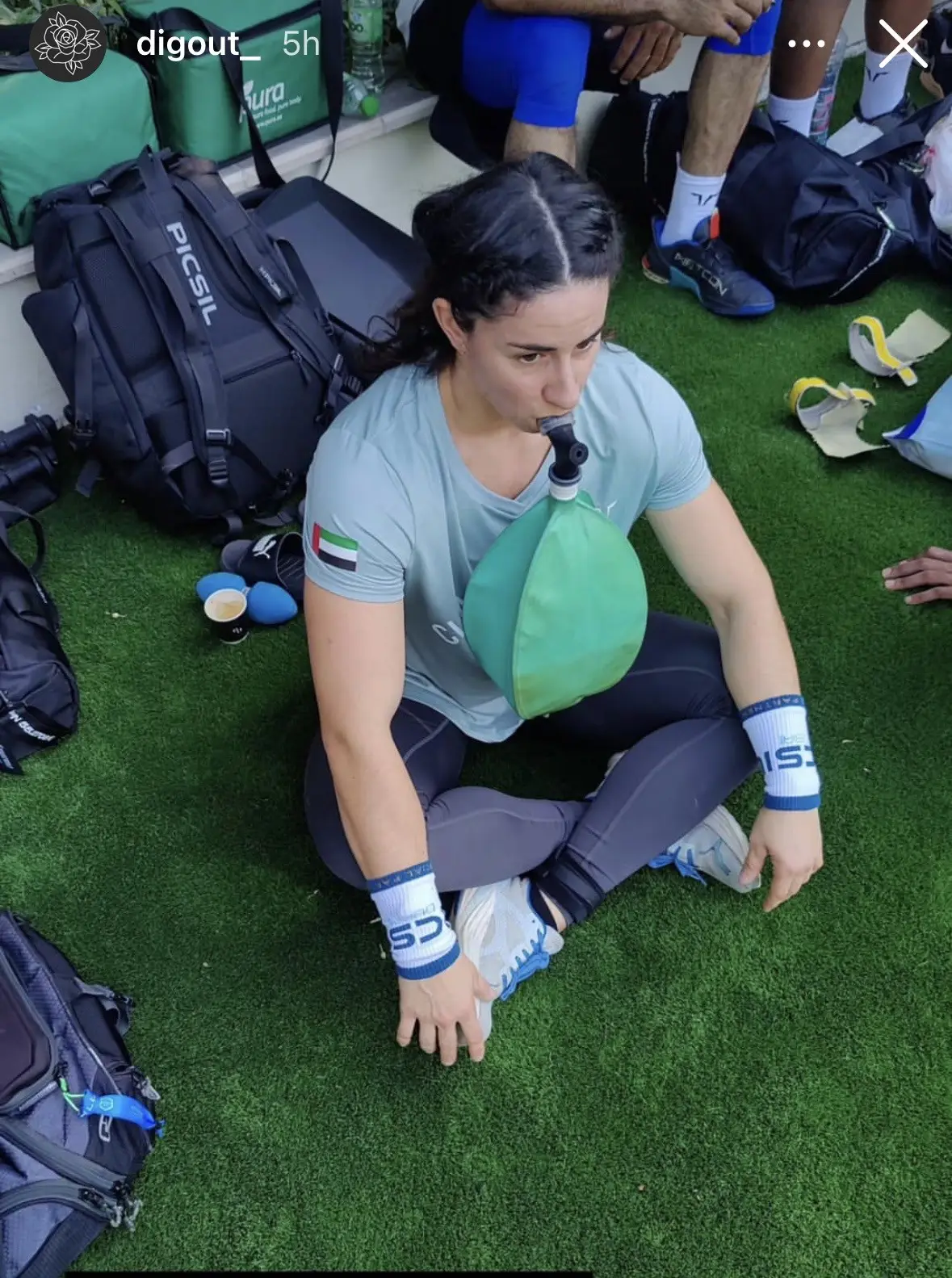
The second is targeted respiratory conditioning using Isocapnic’s Breathe Way Better technology.
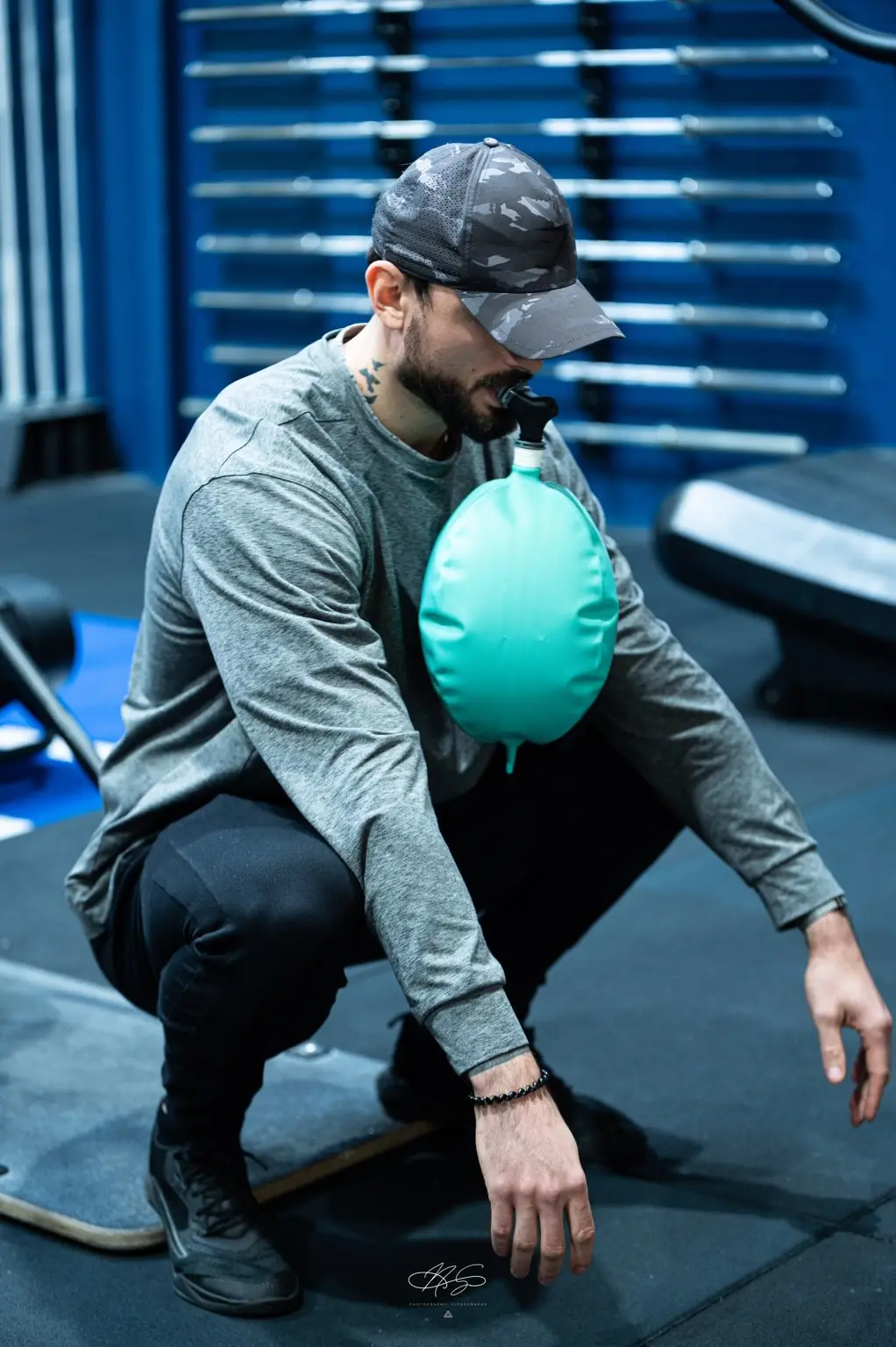
Think of It Like Training Your Biceps
Imagine you wanted to develop stronger biceps. You could do hundreds of pull-ups, but eventually your grip, back muscles or overall fatigue might limit how much training stimulus you can deliver to your biceps.
Instead, you could pick up a dumbbell and perform bicep curls, directing the training stimulus precisely where you want it without unnecessarily fatiguing the rest of your body.
Isocapnic applies a similar principle to the respiratory system.
During conventional exercise, an athlete may reach the limits of their legs or overall metabolic capacity before fully challenging their respiratory muscles.
By training the respiratory system directly, we can expose it to ventilatory demands that would be next to impossible to achieve and sustain through conventional exercise alone.
For an athlete like Hunter, this means we can target one of his key physiological development opportunities without adding more miles to his legs, more repetitions to his strength program or unnecessary mechanical stress to his body.
It’s not about replacing conventional training. It’s about directing additional training stimulus precisely where it’s needed.
Our respiratory conditioning strategy includes:
- Strategic respiratory warm-ups before training and competition.
- Respiratory tempo sessions designed to condition the breathing patterns and ventilatory outputs associated with race intensity.
- Dedicated high-output respiratory training designed to challenge his ventilatory system well beyond the demands of race pace.
The goal is to expand his maximum ventilatory capacity while continuing to improve the efficiency and sustainability of his race-level output.
The Early Signs Are Exciting
Hunter has already demonstrated some encouraging early-season success, including a victory in Mexico.
But what’s perhaps even more exciting is what we’re seeing in training.
We’re seeing lower heart rates at comparable workloads, encouraging improvements in race simulations, and increasingly controlled efforts at impressive levels of performance.
Hunter himself has expressed surprise at how well he’s performing and how much more controlled those efforts are feeling.
These are encouraging signs that the combined training approach is moving things in the right direction.
Of course, the real test will come during the major championship events ahead. We’re still relatively early in this process, and there’s plenty of work to be done.
Making an Incredible Athlete Even Better
What makes this collaboration particularly exciting is that we’re not rebuilding an athlete from the ground up. We’re working with someone who has already demonstrated what it takes to be among the very best in the world.
Hunter’s commitment, work ethic and willingness to continually explore opportunities for improvement are a testament to why he’s been so successful.
The beauty of this coaching collaboration is how our individual areas of expertise complement one another. David’s strength and functional movement programming, Brent’s exceptional eye for performance and execution, and my work in endurance physiology and respiratory conditioning all contribute to a common objective.
It’s about finding those additional percentages, bringing them together, and giving Hunter every opportunity to perform at his absolute best.
For me, it’s an incredible privilege to be part of this team and contribute to Hunter’s final season in a sport that he has helped shape and in which he has inspired so many athletes around the world.
We’re excited to see what he can do with another gear.
Giddy up!
AUTHORSHIP AND TRANSPARENCY
About this article
Written by
Coach Luke Way is the founder and CEO of Isocapnic and has coached endurance athletes for 20 years. He specializes in elite triathlon, mountain biking, CrossFit, and physiology-led athlete assessment.